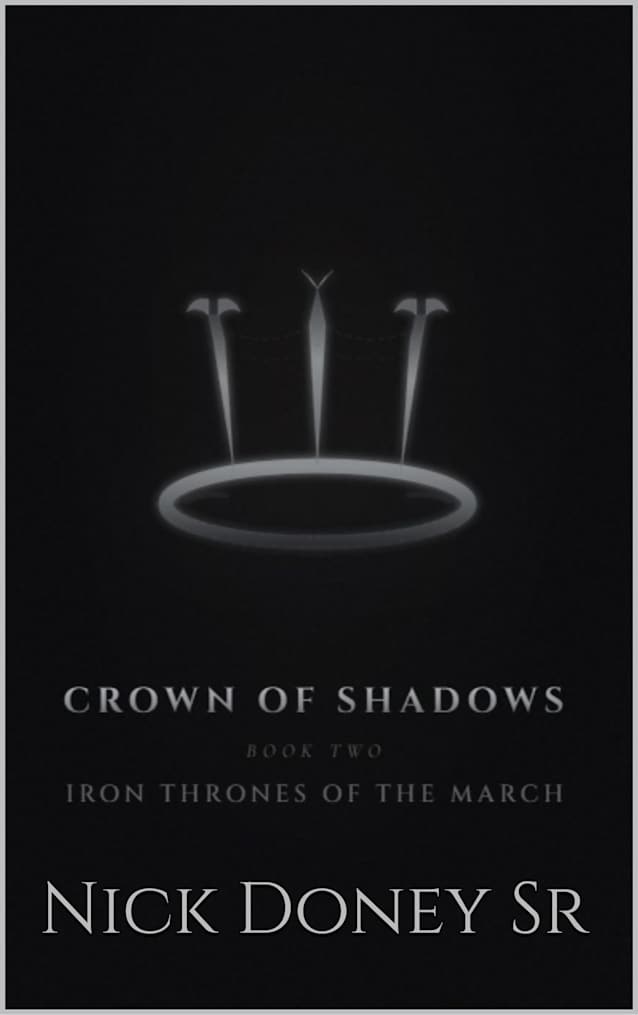
Iron Thrones of the March (Crown of Shadows Book 2)
About
Where the first book dreamed of kingdoms, the second forges empires in iron and blood. Ottokar II, grandson of the visionary duke and son of the one-eyed Wenceslaus I, inherits a Bohemia elevated but not sated, a kingdom whose prophetic destiny demands expansion into the sprawling territories of Austria, Styria, Carinthia, and Carniola. Called the Iron and Golden King for the dual nature of his reign, Ottokar II is the trilogy’s most complex figure, a warrior-poet of extraordinary charisma and tactical brilliance whose consultations with the Devil’s Bible grant him prescient visions of enemy movements even as those same visions show, with unflinching clarity, the word that will define his end: Marchfeld. He knows how he will die. He builds his empire regardless, driven by a conviction that willpower and iron can defy the supernatural contracts his grandfather signed, and the novel unfolds as a relentless examination of whether ambition fueled by dark magic can outpace the doom that magic guarantees.
The scope of the narrative expands dramatically, shifting between the brutal realities of thirteenth-century siege warfare and the supernatural corruption that follows the Přemyslid advance like a plague. At Friesach, catapults groan and mangonels hurl stone into walls while Ottokar awakens the Blaník sleeping knights through blood oaths sworn in mountain caves, spectral warriors who turn the tide of battle but demand repayments that no mortal king can afford. At Kressenbrunn, the novel’s centerpiece battle, Ottokar opens the Devil’s Bible to its most forbidden passage and summons storm spirits from the Dalimil Chronicle myths, conjuring gales and lightning that drown the Hungarian army of Béla IV beneath waters that rise without rain, a victory so absolute that it secures Styria and cements the super-kingdom’s southern border. But the magic extracts its price through the queen herself, whose mysterious illness worsens with each supernatural invocation until her death reveals a rusalka curse placed by a spurned Moravian lover, a personal vendetta woven into the fabric of political conquest, proving that the costs of empire are never only paid on the battlefield.
Meanwhile, the forces of dissolution gather strength with a patience that mirrors the shadows climbing the crown. Rudolf of Habsburg, reimagined as a calculating antagonist of terrifying restraint, funds German settler militias in Bohemian mining towns, exploits ethnic tensions between Slavic populations and Ostsiedlung colonists, and orchestrates a network of bribes and intermarriages designed not to defeat Ottokar directly but to hollow out his empire from within. In Prague, demonic possessions spread from Houska Castle’s restless pit, entities slipping into convent novices and nobleman’s sons, into court advisors and bridge guards, until Agnes and her Knights of the Red Star find themselves fighting a supernatural insurgency within the capital itself. In the silver mines of Kutná Hora, gnome bargains come due in the form of worker disappearances and underground horrors. In Moravia, lords who once bent the knee now whisper of autonomy. And in Silesia, Piast pretenders forge secret alliances with the Teutonic Order, smuggling dark artifacts across borders in preparation for the reckoning that everyone senses approaching. The novel culminates at the Battle of Marchfeld, that plain which has haunted every vision since the Devil’s Bible was first opened, where Hungarian deserters abandon Ottokar’s flanks, where a Bohemian lord possessed by Houska’s demons delivers the fatal backstab, and where the Iron and Golden King falls on the very ground that prophecy had always promised would receive him, his empire shattering in a single afternoon while the Devil’s Bible vanishes into Habsburg hands, and the crown of shadows passes, heavier and thornier than before, to a son whose legitimacy is already questioned an